

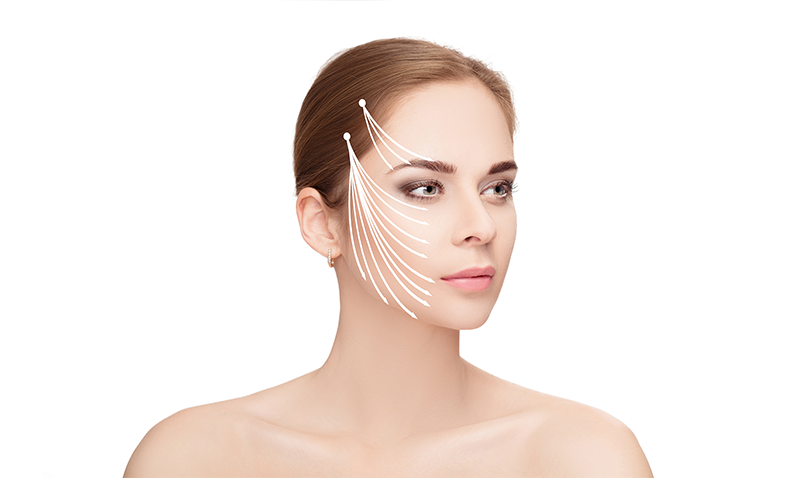
Liquid Facelift: A Non-Surgical Way to Restore a Younger, More Refreshed Appearance
Every time you look in the mirror, you may notice signs of fatigue on your face, fine lines, or mild skin laxity that make you feel less confident. However, most of these changes can be addressed without surgery — without a scalpel and without a long recovery period.
A liquid facelift is one of the most effective non-surgical solutions offered by modern aesthetic medicine. Let’s explore this treatment together.
Why Does Our Face Age?
Aging is not only about visible wrinkles on the surface of the skin. The real changes happen in the deeper layers of the face:
- Collagen loss: Starting in our 20s, the skin reduces its collagen production by approximately 1% each year.
- Loss of fat volume: Fat pads in areas such as the cheeks, temples, and under-eye region decrease, causing the face to appear hollow and tired.
- Bone and muscle changes: The facial structure also changes over time, contributing to sagging and loss of youthful contours.
When these factors come together, the result is volume loss, skin laxity, and wrinkles.
What Exactly Is a Liquid Facelift?
A liquid facelift is a non-surgical facial rejuvenation treatment that restores and reshapes facial contours using injectable dermal fillers and biostimulatory products.
During the procedure, biocompatible substances such as hyaluronic acid, calcium hydroxylapatite, or poly-L-lactic acid are injected beneath the skin using very fine needles or cannulas. This helps to:
- Restore lost facial volume,
- Enhance and define facial contours,
- Reduce wrinkles and fine lines,
- Stimulate the skin’s natural collagen production.
The result: a natural, refreshed, and youthful appearance — with the ability to return to your daily routine on the same day.
Which Areas Can Be Treated?
A liquid facelift is not limited to a single area. It is a comprehensive treatment that can be applied to different parts of the face depending on individual needs:
- Cheeks and cheekbones: Volume restoration and contour enhancement
- Nasolabial folds: Smile lines
- Under-eye area and tear trough: Dark circles and hollowness
- Jawline: Improved definition and contour
- Forehead and temples: Restoration of lost fullness
- Around the mouth: Fine lines and mild sagging
Every face is unique. Therefore, the areas to be treated are determined after a detailed facial assessment.
How Does the Procedure Work?
Step 1 — Facial Analysis
Your skin quality, volume loss, facial proportions, and expectations are carefully evaluated. A personalized treatment plan is created.
Step 2 — Preparation
A topical anesthetic cream is applied to numb the treatment areas and ensure maximum comfort.
Step 3 — Injection
Using very fine needles or cannulas, fillers are strategically injected into predetermined areas. The procedure usually takes approximately 30–60 minutes.
Step 4 — Results
Initial improvements can often be seen immediately after the treatment. The final, settled results usually appear within 1–2 weeks.
How Long Do the Results Last?
Depending on the type of filler used, individual skin characteristics, and lifestyle factors, the effects of a liquid facelift generally last between 12 and 24 months.
Biostimulatory products may provide longer-lasting and progressive improvements by encouraging the skin’s own collagen production.
Who Is an Ideal Candidate?
A liquid facelift may be especially suitable for:
- Individuals between the ages of 30 and 50 experiencing early signs of aging,
- Those seeking a less invasive alternative before considering surgical facelift procedures,
- People with volume loss and mild to moderate skin laxity,
- Individuals who desire quick results without significant interruption to daily life.
For patients with significant excess skin or advanced sagging, surgical facelift procedures may be a more appropriate option. A professional consultation is necessary to determine the best approach for your needs.
Is It Safe? Important Things to Know
When performed by an experienced medical professional, a liquid facelift is considered a safe procedure. However, there are important considerations:
- FDA-approved or CE-certified products should be used.
- This treatment must only be performed by qualified physicians. Receiving injections from non-medical individuals carries serious health and safety risks.
- Temporary swelling, redness, or bruising may occur after treatment but usually resolves within a few days.
- Low-cost procedures performed under unsuitable conditions may lead to complications that can be difficult to correct.
Liquid Facelift or Surgical Facelift?
| Liquid Facelift | Surgical Facelift | |
|---|---|---|
| Method | Injectable treatment | Surgical operation |
| Duration | 30–60 minutes | 3–5 hours |
| Recovery Time | Same day | 2–4 weeks |
| Anesthesia | Topical anesthetic | General anesthesia or sedation |
| Longevity | 12–24 months | 5–10 years |
| Risk Level | Minimal | Moderate |
Both approaches have their own indications. The most important step in making the right decision is a thorough consultation.
A liquid facelift is one of the smartest ways to restore a more youthful appearance. Without surgical risks, it offers natural-looking and personalized results, making it one of the most valuable tools in modern aesthetic medicine.
I am here to listen to your concerns, analyze your facial structure, and create the most suitable treatment plan tailored specifically to you.
📍 Contact us to schedule your consultation.
This article is for informational purposes only and does not replace professional medical advice. Every treatment plan is individualized and should be discussed with a qualified physician.
— Dr. Nuriyya Guliyeva, Medical Aesthetics Specialist
